
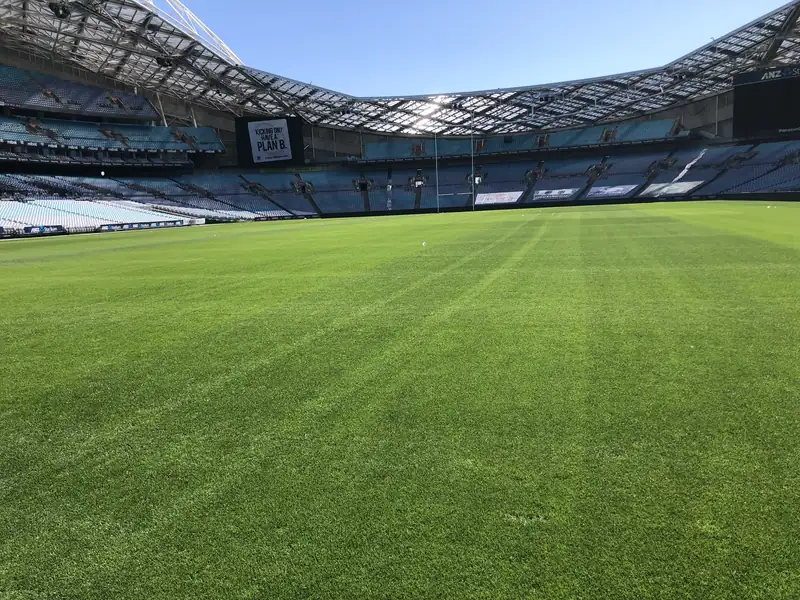
Sports Turf Agronomy: Traffic, Recovery and Surface Performance
Sports turf agronomy is the management of high-performance natural turf surfaces under three concurrent pressures: intensive traffic, environmental stress and the demands of year-round playability. Because of these pressures, surfaces operate at the edge of what turfgrass can physiologically sustain. This means that the agronomic decisions behind them differ substantially from amenity or commercial turf management. For a discussion about the state of Australian turfgrass agronomy.
To support this, Gilba Solutions applies soil science, turf physiology, irrigation management, recovery models and environmental analysis. As a result, golf courses, stadiums, racecourses and sportsfields across Australia and internationally are able to optimise surface performance, recovery capacity and long-term turf stability.
Modern sports turf management is increasingly data-driven. In particular, growth potential modelling, traffic recovery forecasting, irrigation water interpretation, plant growth regulation and environmental stress analysis now sit at the centre of agronomic decision-making. To make these calculations available in one place, Gilba Solutions develops the GAIP Hub, a platform built specifically for professional turf managers.
Written by Jerry Spencer, Principal Agronomist (Hons Soil Science, Newcastle Upon Tyne; Grad Dip UTS). Author of Nutrition of Sports Turf in Australia (CSIRO/Landlinks Press).
Published: May 2026
What This Topic Covers
Traffic Stress & Recovery
How traffic intensity, compaction, environmental stress and recovery windows together shape turf performance and surface stability.
Related topics:
- How does traffic impact turf recovery?
- What determines recovery after events?
- How can you speed up turf recovery after heavy use?
- Stadium recovery systems
- Traffic Tolerance Calculator
Surface Performance & Firmness
Managing firmness, infiltration, soil moisture and surface consistency across sports turf environments.
Related topics:
- Rootzone permeability
- Organic matter accumulation
- Infiltration decline in sand-based systems
- Surface moisture management
- The role of fines in sand rootzones
- Organic matter and soil wetting agents
- Sand amendment calculator
Stadium Turf Management
Managing stadium turf under heavy traffic, shade, event scheduling and restricted recovery environments.
Related topics:
- Shade stress management
- Amendments for sand constructions
- Supplemental lighting systems
- Event recovery management
- Applying the right products at the right time.
Shade & Environmental Stress
How shade, temperature, humidity and environmental stress affect turf performance and recovery.
Related topics:
- Managing turf in shade
- Growth potential models
- Supplemental lighting
- Light requirements for turfgrass recovery
- Warm-season turf recovery
- Flood recovery in sports turf

Overseeding & Transition Management
Balancing winter surface quality with warm-season recovery and spring transition.
Related topics:
- How does overseeding affect couch recovery?
- Perennial ryegrass overseeding
- Transition management
- Sulfonylurea herbicides for transition
- Advances in perennial ryegrass breeding
Nutritional & Recovery Programs
Integrating nutrition, growth regulation and irrigation management to support recovery and surface performance.
Related topics:
- Growth potential in turf management
- Plant growth regulators and recovery
- GAIP Hub: daily growth potential, recovery, irrigation and spray-decision modelling
- Gypsum for infiltration management
- Urease inhibitors
- Nitrification inhibitors
- The pros and cons of organic fertilisers on sportsturf
- Precision fertility management
- Potassium fertilisers
- Magnesium fertilisers
- Sulphur in turfgrass nutrition
- The role of manganese in turfgrass
- Turf nutrient management
- Nutrition programs for high-performance turf
- Soil aeration

Weed and Pest Management
Weed, disease and pest dynamics directly affect surface quality, recovery capacity and long-term turf performance under intensive management. As a result, integrated pest, weed and disease management is fundamental to sports turf agronomy.
Pre-emergent herbicide timing
Pre-emergent herbicides are applied before target weed seeds germinate, which is driven by soil temperature rather than calendar dates. Summer annuals germinate as soil temperature rises through 14 to 18 °C; winter annuals such as Poa annua germinate as soil temperature falls through 8 to 16 °C. The chart below shows typical application windows for Sydney, Canberra and Melbourne.

How does traffic impact turf recovery?
Traffic affects turf recovery by damaging leaf tissue, crowns and root systems, increasing soil compaction and reducing rootzone oxygen availability. As the amount of traffic increases, turfgrass redirects energy toward tissue repair and survival rather than growth and recovery.
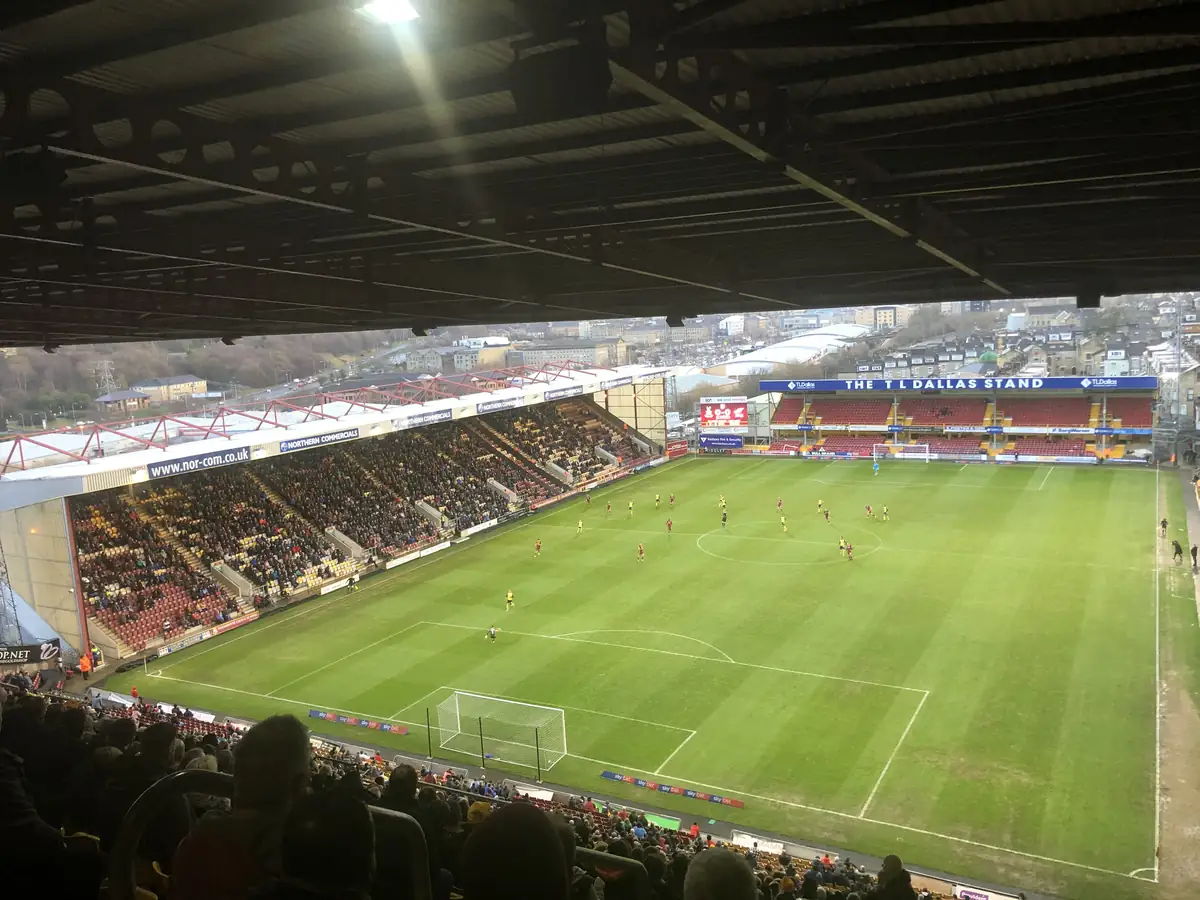
Valley Parade Stadium during an EFL match showing a cool-season perennial ryegrass pitch under active match-day wear
Compact soils restrict root growth, infiltration and gas exchange, and slow down recovery even in good growing conditions. Recovery rates depend on the turf species, temperature, moisture conditions, mowing intensity and the recovery interval between events.
Warm-season grasses such as couch and kikuyu recover faster under sustained warm conditions due to their lateral growth and ability to regenerate. Effective traffic management requires strategic scheduling, cultivation, nutrition and rest periods to maintain surface performance and long-term turf stability.
How can you speed up turf recovery after heavy use?
Turf recovery after heavy use is at its highest when you reduce any further physiological and environmental stress. The main ways to achieve this are reducing traffic, improving light availability, maintaining adequate but not excessive soil moisture, relieving soil compaction and supporting active growth through nutrition.
Recovery is temperature-dependent. Warm-season grasses recover fastest under sustained warm conditions where carbohydrate production and lateral growth are optimal. This tends to be above 24 °C soil temperature (Gelernter and Stowell 2005). Supplemental lighting, careful nitrogen management, cultivation and strategic event scheduling will improve recovery rates and surface stability. Effective recovery programs account for species-specific growth characteristics, the seasonal, rootzone conditions and the cumulative effects of repeated traffic stress.
What determines recovery after events?
Turf recovery after events is a balance between the amount of turf damage and the plant’s ability to regenerate new tissue before the next stress period. Recovery is influenced by the temperature, turf species, growth potential, traffic intensity, event duration, soil moisture, light availability and rootzone.
Warm-season grasses recover more rapidly under favourable summer conditions, while cool temperatures, shade, compaction and waterlogged soils reduce recovery rates. Recovery declines when windows between events become too short to allow carbohydrate replenishment and canopy regeneration. Effective post-event recovery programs integrate traffic management, cultivation, nutrition, irrigation and environmental monitoring to support sustained turf performance.
What causes infiltration decline in sand-based sports turf rootzones?
Falls in infiltration in sand-based sports turf rootzones are driven by a build-up in organic matter in the top 0 to 40 mm of the profile. As organic matter increases, it fills the soil pore space, reduces hydraulic conductivity and creates hydrophobic layers that resist wetting. Sand-based rootzones built to USGA or similar specifications start with infiltration rates of 150 to 300 mm per hour but these can drop below 25 mm per hour within five to seven years without proper maintenance.
The decline is non-linear. Once organic matter exceeds approximately 4 % by weight in the top 40 mm, infiltration falls rapidly. Contributing factors include thatch from intensive nitrogen programs, fine-particle migration from topdressing or silt contamination, and biological binding of sand particles. Effective management requires routine organic matter measurement, dilution through sand topdressing, hollow tine aeration timed to active growth periods, and where appropriate, the use of soil wetting agents to restore uniform infiltration. Surface performance testing (firmness, traction, surface moisture) should accompany organic matter sampling so that any intervention thresholds are based on agronomics, not just laboratory values.
How do stadium fields maintain turf quality under intensive event schedules?
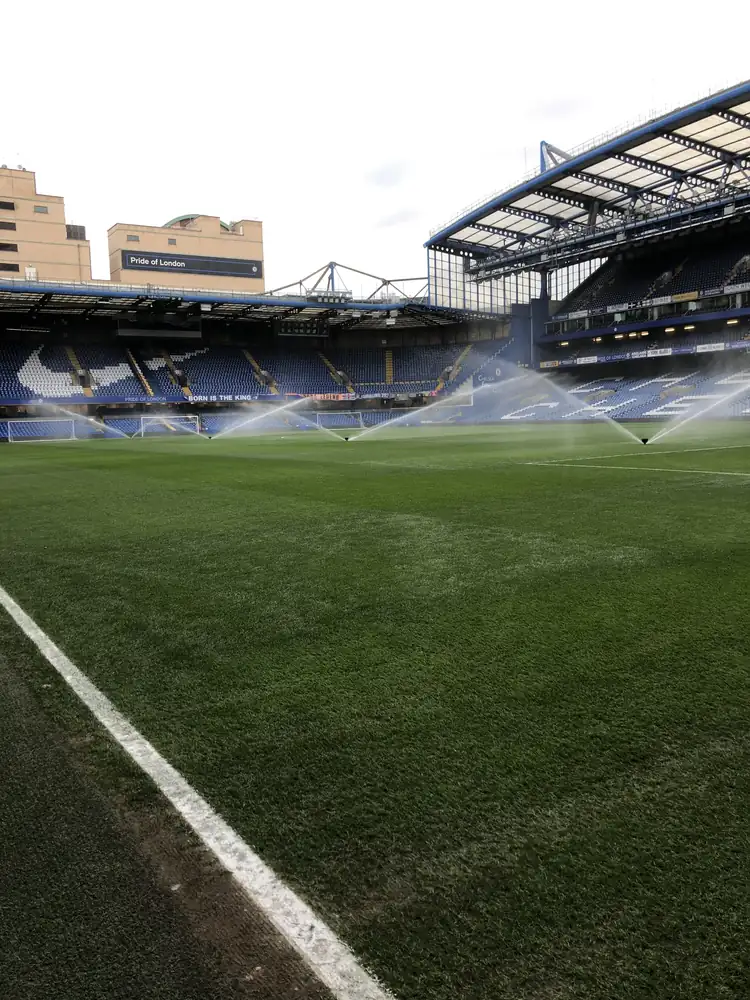
Stamford Bridge pre-match irrigation in operation with multiple pop-up sprinklers running across the pitch
Stadium turf maintains quality under intensive event schedules through four levers: engineered rootzones, supplemental lighting, climate control where possible, and disciplined recovery between events. To withstand heavy traffic, modern stadium rootzones combine sand-based profiles with reinforcement systems (stitched fibre, hybrid grass or fully synthetic substrates within the rootzone) that protect the crown and root structure. Without reinforcement, surface failure is rapid. As a result, pure natural turf in an enclosed bowl receives insufficient light, restricted air movement and concentrated traffic that leaves recovery windows too short to rebuild carbohydrate reserves.
To address the light deficit, supplemental lighting (high-pressure sodium or LED rigs) extends effective photosynthesis to 12 to 16 hours per day and is now standard in shaded or roofed venues. In addition, between-event recovery relies on growth potential modelling to schedule nitrogen, cultivation and plant growth regulators precisely when the turf can use them. By contrast, event schedules that ignore turf recovery capacity, particularly across back-to-back sport codes or concerts, are the most common cause of stadium surface failure in Australia and the UK. For this reason, the calendar must be managed as an agronomic constraint alongside its commercial role.
How much light does sports turf need to perform and recover?
Sports turf requires a daily light integral (DLI) of around 30 mol/m²/day for couch and kikuyu, and 20 to 25 mol/m²/day for cool-season species such as perennial ryegrass and tall fescue. Below these levels, plants cannot photosynthesise enough to support normal growth, recovery from traffic or resistance to disease. As a result, light deficit is one of the most common causes of stadium and sports turf failure. Unlike soil compaction or nutrition, it cannot be corrected through normal agronomic inputs.
Shade reduces both photosynthetically active radiation (PAR) and the effective hours of useful light. For example, a stadium bowl with surrounding building shadows can drop below 10 mol/m²/day in winter even at low latitudes. Warm-season grasses tolerate moderate shade for short periods through reduced metabolism. However, prolonged shade triggers thinning, increased disease pressure and loss of competitive ability against weeds. To address this, management responses include canopy thinning where buildings or trees can be modified, supplemental lighting where they cannot, cultivar selection (some couch and zoysia cultivars perform better in moderate shade), and adjusting traffic schedules to match available recovery capacity. In addition, PAR sensors and DLI loggers should be installed wherever shade is suspected to be limiting performance, so that decisions are based on measured light rather than visual estimate.
How does overseeding affect couch recovery?
Overseeding delays couch recovery through direct competition for light, water, nutrients and canopy space during spring transition. When you overseed with perennial ryegrass it maintains winter colour and surface density. However, aggressive ryegrass populations suppress couch growth as the temperatures begin to favour warm-season turf recovery.
This delay in recovery intensifies under excessive nitrogen inputs, heavy traffic, prolonged cool weather or poor light availability. Successful transition balances winter surface performance against the recovery requirements of the underlying couch base. Cultivar selection, seeding density, mowing practices, temperature and event scheduling all influence the recovery speed and success of any spring transition.
What is the role of growth potential in sports turf nutrition planning?
Growth potential is a temperature-based model that estimates how rapidly a turfgrass species grows on any given day. As a result, nitrogen and other nutrient inputs can be matched to the plant’s actual capacity to use them. The model (Gelernter and Stowell, 2005) calculates a daily growth potential value from 0 to 1, based on the deviation of average daily temperature from the species optimum. For example, couch peaks around 31 °C and perennial ryegrass around 20 °C, with both declining rapidly above and below those temperatures. Because of this temperature dependence, growth potential is the most useful input for converting calendar-based nutrition into agronomically responsive nutrition.
Applied correctly, growth potential prevents two failure modes. The first is over-application during low-growth periods. In this case, nitrogen is wasted to leaching, denitrification or excessive shoot growth at the expense of root development. The second is under-application during peak growth. Here, the plant has the capacity to use more but is fed at off-peak rates. To avoid both, daily or weekly growth potential values are used to scale a target annual nitrogen rate, delivering more during high-growth windows and less during cool or hot periods. In addition, the same model can guide cultivation, plant growth regulator applications and overseeding timing. To make this practical at scale, the GAIP Hub and similar decision-support tools automate the calculation from in-ground sensors, weather station data or forecast inputs, removing the guesswork from seasonal nitrogen planning.
When should pre-emergent herbicides be applied to sports turf?
You should use pre-emergent herbicides before target weed seeds germinate, which is determined by the soil temperature, and not by calendar date. Most summer annual grass weeds (crabgrass, summer grass, and crowsfoot) germinate when the soil temperature at 50 mm depth reaches 14 to 18 °C and remains there for several consecutive days. Winter annual weeds such as Poa annua germinate when the soil temperature falls below 18 °C and remains in the 8 to 16 °C range. If you apply these earlier than the germination window, it risks herbicide degradation before seeds start to germinate. If you apply too late it means seeds have already germinated past their susceptible stage.
Effective pre-emergent timing requires a soil sensor or local soil temperature data, application 7 to 14 days before weeds are forecast to germinate, and adequate irrigation within 24 to 72 hours. This ensures that the active ingredient then moves into the upper soil profile where the seeds germinate. Common active ingredients in Australia include prodiamine, dithiopyr, oxadiazon and indaziflam, and each of these has a different residual period and turf safety profile. Pre-emergent programs should integrate with cultivation, overseeding and renovation schedules. For example, aggressive scarifying or core aeration after application disrupts the herbicide layer and reduces efficacy. Where cultivation is unavoidable, indaziflam or split applications can be used to maintain a barrier. Resistance management requires rotation between the herbicide modes of action and integration with non-chemical controls (overseeding, scarifying, irrigation management) to reduce selection pressure.
Key considerations
Recovery and surface performance on sports turf comes down to a few recurring variables. The same ones drive traffic recovery, post-event recovery and overseed transition decisions.
The plant
- Species and cultivar regenerative capacity
- Growth potential (temperature-driven recovery rate)
- Carbohydrate reserves and canopy density
Stress
- Traffic intensity and event duration
- Recovery window between events
- Mowing intensity and height of cut
- Overseed competition during transition
Environment
- Soil temperature
- Soil compaction and rootzone oxygen
- Surface and rootzone moisture
- Light availability and shade
Management levers
- Nitrogen and balanced nutrition
- Cultivation and aeration timing
- Irrigation management
- Plant growth regulator programs
- Event scheduling and rest periods
- Supplemental lighting in shade or stadium environments
- See also: dolomite and surface sealing on dispersive soils
References
- Beard, J.B. (1973). Turfgrass: Science and Culture. Prentice Hall.
- Gelernter, W. & Stowell, L. (2005). Improved overseeding programs: The role of weather and growth potential. PACE Turfgrass Research Institute Technical Report.
- Strunk, W., Patton, A.J., et al. (2021). Couch cultivar traffic tolerance ranking. International Turfgrass Society Research Journal. DOI: 10.1002/its2.74
- Pornaro, C., Macolino, S., Menegon, A. & Richardson, M.D. (2024). Traffic tolerance of perennial ryegrass. HortScience, 59(1), 64–71.
- Murphy, J.A. (2011). Managing traffic stress in turf. Rutgers Cooperative Extension.
- McAuliffe, K. (2012). Ryegrass transitioning in couch. Horticulture Australia. Project Number: TU10015.
- Dickson, K.H., Sorochan, J.C., et al. (2021). Mechanical ryegrass removal from warm-season turf. International Turfgrass Society Research Journal.
- Schmidt, C.J., et al. (2021). The effects of plant growth regulators on aeration recovery. Western Canada Turfgrass Association.

Principal agronomist, Gilba Solutions Pty Ltd
BSc Hons Soil Science (Newcastle). Former STRI agronomist. Author of Nutrition of Sports Turf in Australia (CSIRO/Landlinks Press) and The Definitive Guide to Australian Turfgrass Pesticide Management. 35+ years advising on sports turf, golf and stadia across Australia, NZ, UK and Europe.