
You use grass colourants, lawn pigments, and grass dyes to instantly paint grass green. They can be used on turf grass surfaces in both professional and domestic settings.
These:
- Cost less than overseeding.
- Avoid the issue of having to remove over-seeded grass from warm-season turf.
- Give an instant natural result.
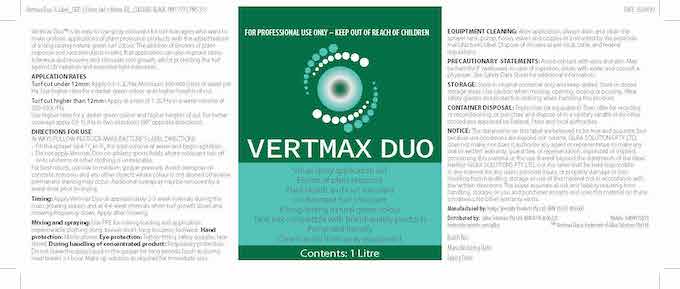
- Some have plant health benefits. e.g Bayer with their Stressgard® technology or Vertmax Duo.
Are Grass Colourants Safe?
Turf Colourants are very safe. Once these dry they are safe to the environment, pets and people. Their active is non hazardous to fish or plants.
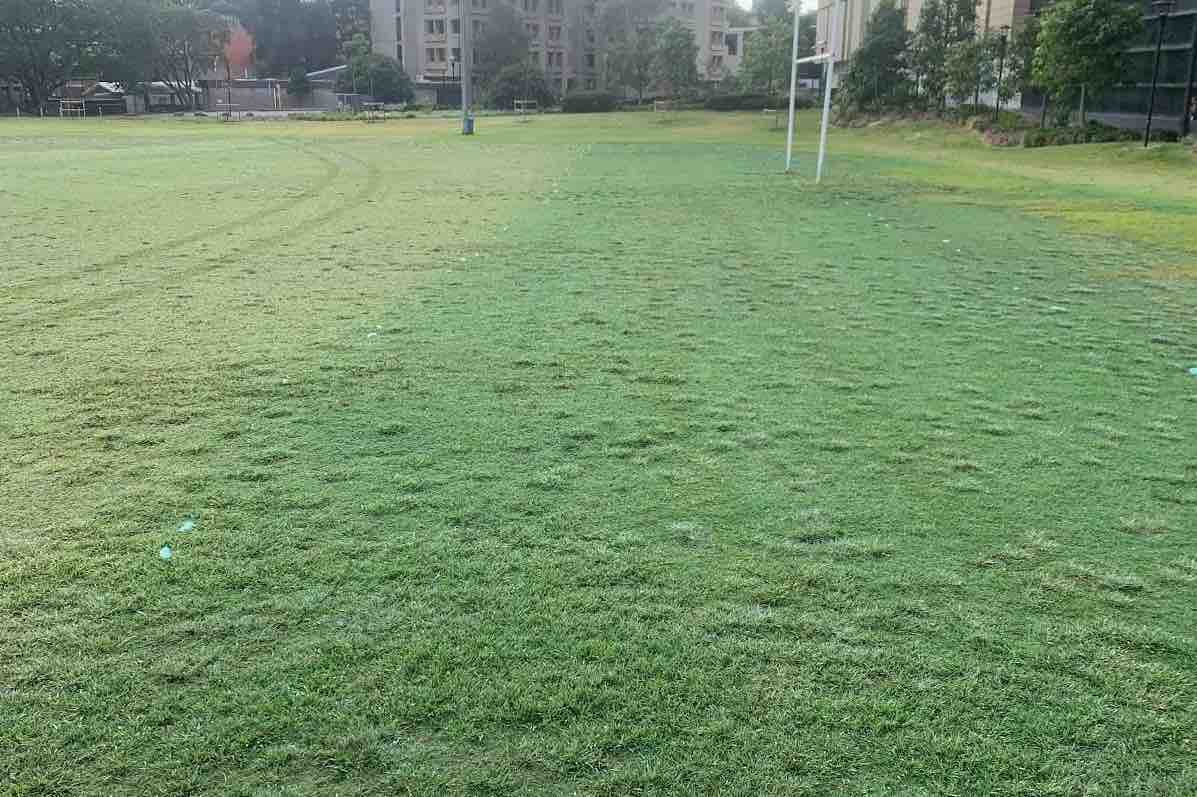
However, there are major differences between grass dyes, lawn pigments, and paints.
Types of Turf Pigments, Grass Dyes, Paints & Colourants.
Colourants can be dyes, pigments, or paints. These products allow you to paint grass green. They contain a solvent, a colourant, additives, and up to 40% binder.
The difference between a lawn pigment and a dye:
- A lawn pigment is a suspension of very small particles in a liquid. Over time these particles tend to settle to the bottom of the container. This is why you need to shake a drum to put these back into suspension if it has settled out.
- When you apply a lawn pigment it coats the leaf surface.
- A turf dye dissolves in water and chemically binds to the leaf. These are in use in spray indicators.
- Pigments are able to resist fading. This contrasts with dyes that are more vulnerable to fading or bleaching due to UV light.
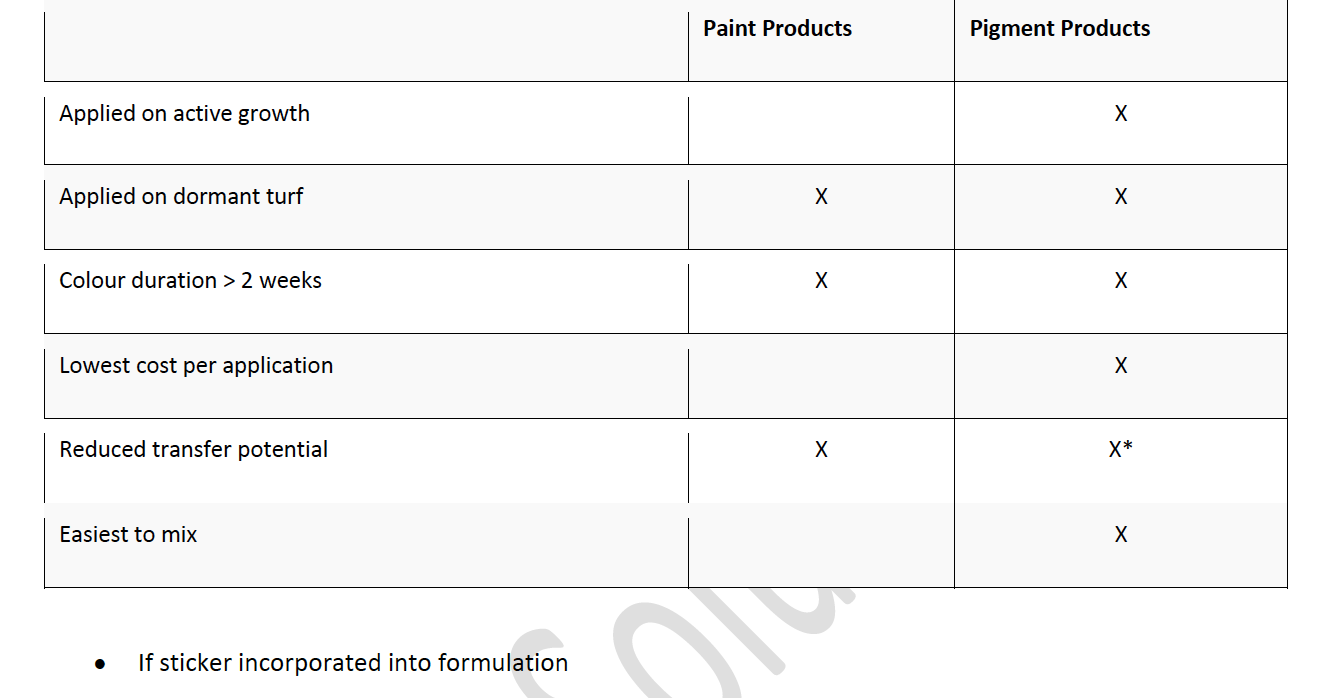
Products that allow you to paint grass green include Vertmax®, Vertmax Duo®, Green Pig, Ryder, and BASF Vision Pro. These turf colourants are all based on copper pigments. The amount of pigment a product contains determines its rate of use, and the greening effect.
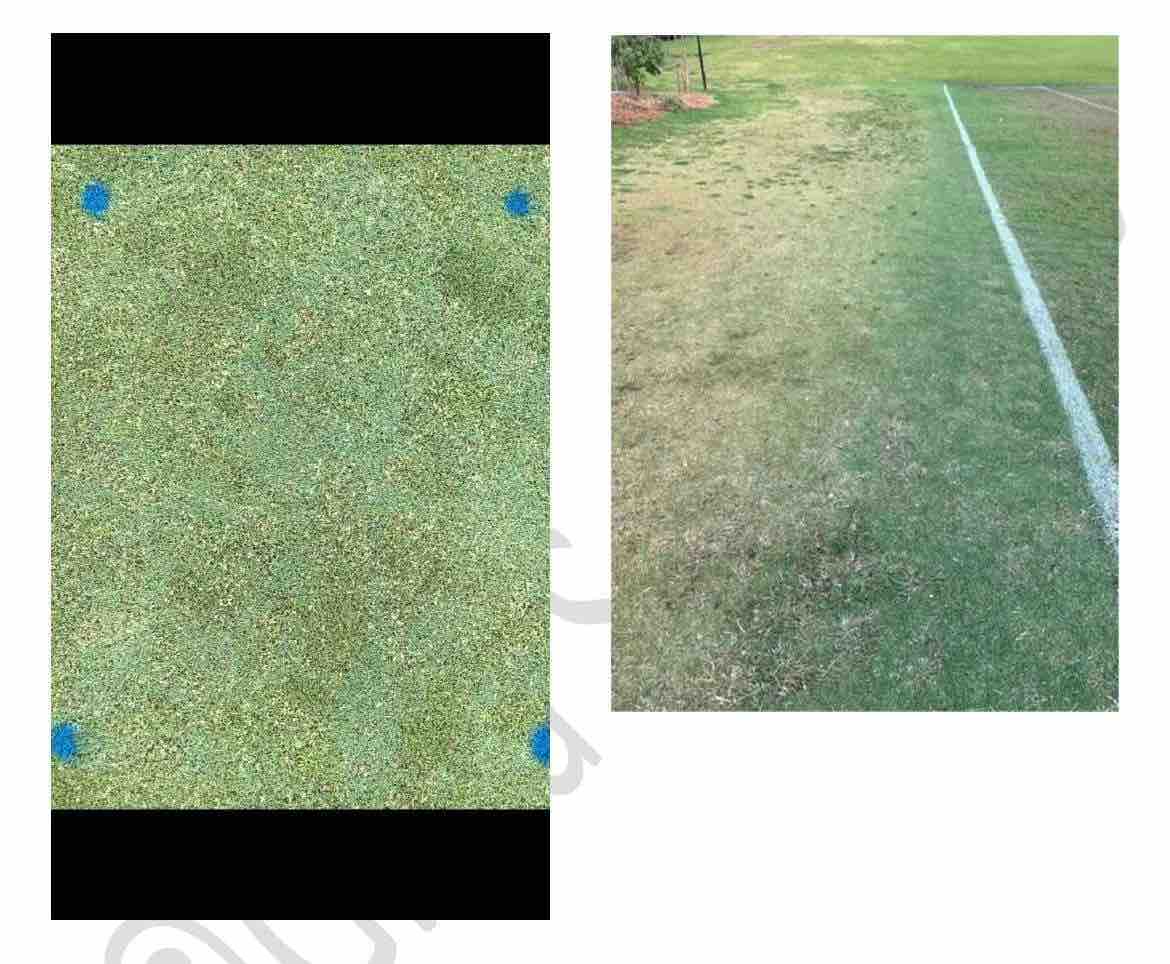
To better understand how these products work we will use research from North Carolina State University, and by Gilba Solutions.
Colourant Influence on Turf Colour.
- Turf pigments tend to be a dark green or blue colour.
- This blue colour is common if you use these on dormant turf.
- Use rates vary due to the amount of binder that they contain. The higher the binder content, the lower the colourant content and the higher the use rate.
- A product with an application rate of 2 L/Ha contains less of the “good stuff” than one with a rate of 1 L/Ha.
How Long do Grass Colourants Last?
- How long these last depends on the time of year that you use them and how often.
- On a golf green that is mowed every other day you will get at best 17 days. See our recent research blog on the longevity of green grass paint and turf colourants on a closely mown golf green for more information.
- On a dormant fairway, they can last two or three months.
- The inclusion of stickers and adjuvants gives better longevity and rain fastness. This is one of the reasons BC Stadium used Vertmax Duo in the 2026 World Cup.
- Vertmax® with QDT (Quick Dry Technology), contains both of these. It lasts around a month when you use it on a dormant couch.
What do Grass Colourants Do?
The use of colourants like Vertmax:
- Increase light absorbance and reflectance.
- Improve the ability of turf to fight against stresses like disease and drought. Vertmax Duo contains salicylic acid.
- Increase the rate of photosynthesis.
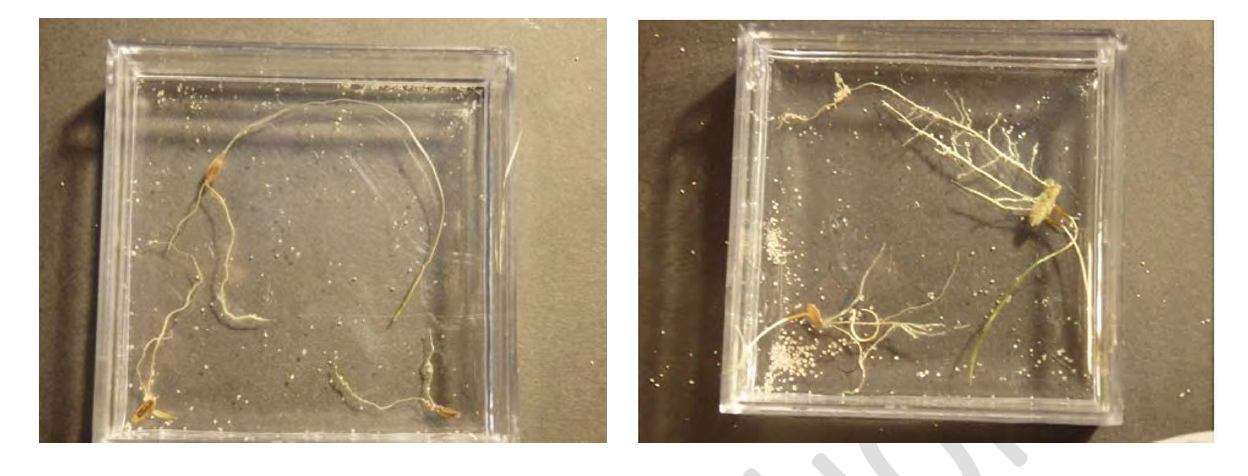
- Increase root growth and lateral root branching.
- Cover up to 1 Ha (10,000 m2) from one L.
- Give grass an instant natural green colour.
Negatives
There are two main negatives with these:
- They can permanently stain concrete and clothes.
- They don’t give a hard wearing surface unlike overseeding.
How to Get the best results with Grass Colourants.
The following effect the results when you use lawn pigments and turf paints:
- The starting turf colour when you use them.
- If the turf is wet i.e. a dew is present.
- The air temperature when you use them.
- You get the best results If you use these before turf goes dormant. This is because the colour of the actively growing turf enhances the colourant.
- Moisture helps if turf is dormant or about to become dormant. As dormancy occurs, the leaf tissue dries. If you irrigate it, the leaf moisture content increases. This increases the turf colourant coverage, and improves the colour which is important with high viscocity products.
- Many turf colourants do not dry or stick very well if you use them in cool weather. This can result in the staining of clothes and shoes. Vertmax Duo® avoids this issue. It contains a sticker that gives a faster dry time plus a nonionic surfactant to give more even coverage.
Research into Grass Colourants and Grass Paint.
A 2 year study into turf colourants vs overseeding. 1Hargey, D., Wherley, B., Reynolds, C., White, R., and Parker, G., Performance of Winter Overseeded and Colorant-treated ‘Tifway’ Bermudagrass Receiving Weekly Irrigation and Simulated Traffic, HORTSCIENCE 51(5):580–587. 2016..
- In both years, there were differences in % green cover, soil volumetric water content (VWC), % visual turfgrass injury, surface hardness, and % couchgrass transition.
- % green cover and visual turfgrass injury levels were similar between annual and perennial ryegrass in year 1;
- In year 2 loss of green cover and greater turfgrass injury were seen in annual ryegrass.
- Residual benefits of a turf colourant in the Autumn lasted from 2 to 4 months.
- Overseeding reduces couch Spring transition by up to 50% vs untreated and colourant-treated plots.
FAQ
What are the pigments in turf?
The term turf pigments refers to either the pigments or colourings found in grasses and other turf plants or turf colourants used to mask turf and improve its colour.
The main ones found in turf are chlorophyll, carotenoids, anthocyanins and flavonoids.
- Chlorophyll gives grass its green colour and is responsible for photosynthesis, the process by which plants convert sunlight into energy. It is found in plant cells and has magnesium as its central atom.
- Carotenoids give turf a yellow or orange hue. These are responsible for absorbing excess light energy and protecting the plant from damage. They are also known to have antioxidant properties.
- Anthocyanins give turf a red or purple colour and are produced by plants in response to environmental stress, such as high light intensity or drought.
- Flavonoids are responsible for a range of colours, such as red, purple or blue, and are also known for their antioxidant and anti-inflammatory properties.
The presence and concentration of these varies depending on the species of grass and the environment it is grown in.

What are turf colourants and pigments?
A Turf colourant or turf paint or turf dye is a product that is used to change or enhance the colour of turfgrass. It is typically a liquid which you apply to the turf through a sprayer. The colourant is usually made of organic or inorganic pigments that are safe for use on turf. It is designed to be long-lasting, weather-resistant, and easy to apply.
References

Principal agronomist, Gilba Solutions Pty Ltd
BSc Hons Soil Science (Newcastle). Former STRI agronomist. Author of Nutrition of Sports Turf in Australia (CSIRO/Landlinks Press) and The Definitive Guide to Australian Turfgrass Pesticide Management. 35+ years advising on sports turf, golf and stadia across Australia, NZ, UK and Europe.