Spring Dead Spot in Couch: The Rings You See in August Started Last Autumn If you manage couch (Cynodon dactylon × C. transvaalensis) in the cooler half of Australia, you know these rings caused by spring dead spot in couch grass. They surface as the turf greens up in...
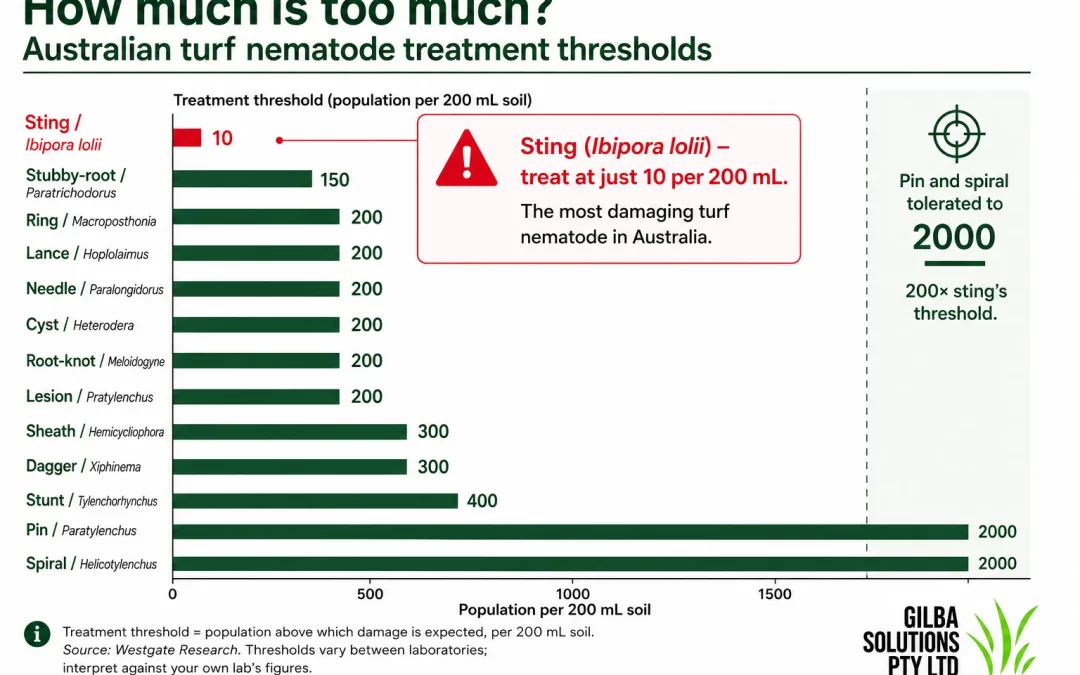
Turf Nematodes on Golf Greens: How to Spot and Test for Them in Australia By Jerry Spencer, Principal Agronomist, Gilba Solutions Pty Ltd Plant-parasitic nematodes are the most under-diagnosed cause of decline on Australian golf greens. They feed on roots out of...
When Did Turfgrass Agronomy Get So Devalued in Australia? When did common sense go AWOL in Australian turf? Somewhere in the last few years, glossy brochures have replaced good science and nobody seems to be noticing. Nowhere is it worse than in turfgrass agronomy. To...
When your soil test says ‘deficient’ but the grass is fine Jerry Spencer, Principal Agronomist July 2026 A soil test result is an index, not a verdict. The same green can come back “deficient” from one laboratory and “adequate” from another without a single...
Soil Temperature is the Only Pre-Emergent Trigger That Matters Timing pre-emergent herbicide applications in Australia by calendar month is the most common mistake in turf management. September feels right for summer grass and crowsfoot grass. May feels right for...
We are in the thick of winter, so let’s run through some of the marketing bollo*** that lands in your inbox every year as companies try to drum up sales in their low season for foliar fertilisers. A lot of it starts from real plant science, then quietly...